Do you wonder if your child is ready for Brazilian Jiu Jitsu?
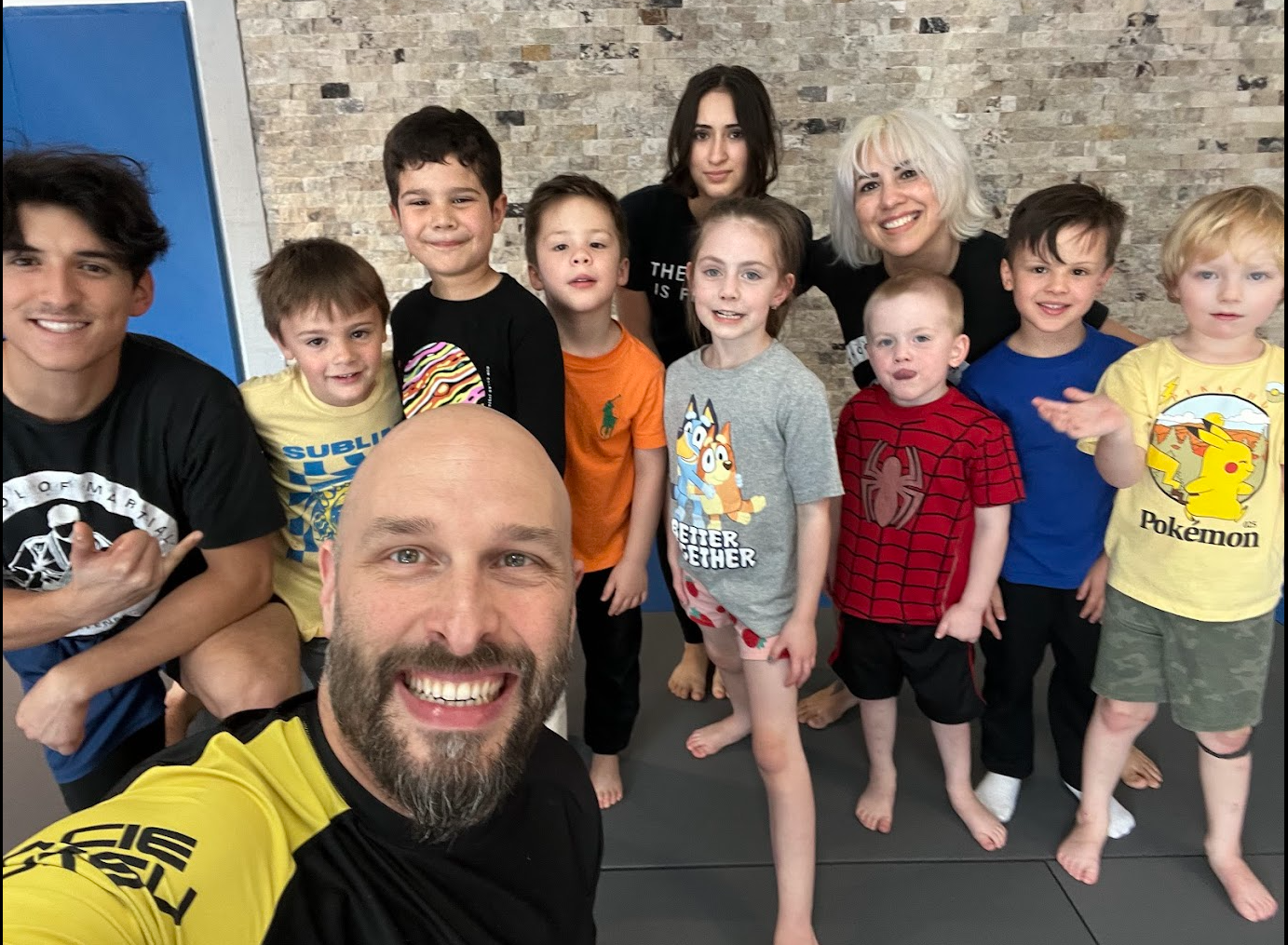
Can My 4-Year-Old Really Do Martial Arts?
If you’re asking yourself, “Can my 4-year-old really do martial arts?” the short answer is yes — but probably not for the reasons most parents think.
At Azul School of Martial Arts, we’ve worked with many young students over the years, and one thing becomes clear very quickly: martial arts at age 4 is less about creating a tiny fighter and more about building confidence, focus, emotional control, and healthy habits early in life.
The earlier children learn movement patterns, discipline, and self-control, the more deeply those lessons become ingrained. It’s similar to learning a second language — young brains absorb information differently.
But that doesn’t mean every 4-year-old walks into class perfectly focused and ready to train. In fact, the opposite is usually true.
What Martial Arts Really Looks Like for a 4-Year-Old
A lot of parents picture one of two extremes:
- A super disciplined child acting like a little soldier
- Or complete chaos with kids running around “playing karate”
The reality is somewhere in the middle.
At this age, kids learn through movement, stories, games, repetition, and imitation. A good martial arts program understands that.
Young children need structure, but they also need fun. If they aren’t engaged, stimulated, and emotionally invested, they won’t focus long enough to learn anything.
That’s why our classes are carefully designed around the way young children actually learn.
Why Some 4-Year-Olds Thrive in Martial Arts
In our experience, the biggest factor isn’t usually the child.
It’s the parents’ expectations.
When parents expect perfect discipline immediately, they often put too much pressure on the child. Focus and self-control are skills that develop through training over time.
Children naturally mimic what gets praised. When they see other students receiving positive attention for listening, sitting properly, and following instructions, they begin copying those behaviors themselves.
That’s how discipline develops.
Not through yelling.
Not through pressure.
Through repetition, structure, consistency, and positive reinforcement.
The second major factor is whether the child can follow limited instruction.
A successful beginner doesn’t need to be perfect. But they do need enough self-control to stop, watch, and imitate.
For example:
- Sitting during instruction
- Watching the next movement
- Staying on the mats
- Following simple directions
If a child constantly runs away during instruction, ignores all redirection, or cannot participate safely, they may simply need a little more time to mature developmentally.
And that’s okay.
What We Actually Teach 4-Year-Olds
Many parents are surprised by how much young children can learn physically and mentally in martial arts.
Within the first 3–6 months, students often begin developing:
- Better listening skills
- Improved focus
- Emotional control
- Increased confidence
- Better body awareness and coordination
- Understanding of when NOT to use martial arts
At Azul School of Martial Arts, one of the most important things we teach is what we call the “Rules of Engagement.”
Kids learn:
- When it is appropriate to defend themselves
- How to avoid becoming aggressive or bullying others
- How to use confidence instead of violence
Physically, even young students can begin learning:
- How to close distance safely
- Basic control positions
- Simple escape movements
- Fundamental martial arts movement patterns
Real Examples of 4-Year-Olds Who Changed Through Martial Arts
One of our current students, John, started training at age 4 after a recommendation from a daycare teacher.
At the time, he struggled with listening and aggressive behavior toward peers. His parents were worried and unsure how to help him.
Within two weeks of starting classes, he was already sitting and focusing during instruction.
Within the first month, his parents began receiving positive reports from school about his behavior. They also noticed major improvements at home with listening and emotional control.
We’ve also worked with shy students who completely transformed through martial arts.
One young student named Sadie started classes after being bullied by another child in her neighborhood. When she first came in, she was so shy that she wouldn’t even step onto the mats.
She watched her first class from the sidelines.
The next class, she finally participated.
By week three, her confidence had noticeably improved.
After six weeks, her parents told us the bullying had stopped. She had stood up for herself confidently, and the other child no longer targeted her.
Confidence changes how children carry themselves — and other kids notice it.
How We Keep 4-Year-Olds Focused During Class
Teaching young children takes far more than simply showing techniques.
It requires understanding how kids think, move, and respond emotionally.
After 30 years of teaching martial arts, we’ve learned a lot about getting and redirecting children’s attention.
Some of the strategies we use include:
- Fast-paced classes with frequent transitions
- Animal movement drills to build coordination
- Simple games that secretly teach martial arts concepts
- Short instruction periods to match attention spans
- Storytelling during technique demonstrations
- Positive reinforcement and recognition
For example, when students are especially focused, we may let them work directly with a coach and say something like:
“Joey gets to work with the coaches because they’re so focused they’ll probably become a coach one day.”
That creates pride, motivation, and healthy peer imitation.
Kids want to rise to the challenge.
Is Martial Arts Good for Shy or Hyperactive Kids?
In many cases, those are exactly the children who benefit most.
Martial arts can help:
- Shy kids build confidence
- Hyperactive kids learn structure
- Unfocused kids develop discipline
- Aggressive kids learn humility and self-control
Many parents wait because they think their child “isn’t ready.”
But often, martial arts becomes part of what helps them become ready.
The key is finding an instructor who understands child development and adapts the teaching style to the individual student.
When a 4-Year-Old May NOT Be Ready Yet
Not every child is ready for martial arts at age 4 — and a good school should be honest about that.
If a child:
- Cannot follow any simple instruction
- Has extremely limited motor control
- Cannot participate safely
- Constantly leaves the training area
- Refuses all participation
…it may be better to wait another 6–12 months or try an activity like gymnastics first.
At Azul School of Martial Arts, we believe in personalized coaching, not babysitting.
If we don’t think a child is ready to train successfully yet, we’ll tell the parents honestly and encourage them to try again later.
That honesty matters.
Many schools will enroll anyone regardless of readiness. We’d rather help children succeed when the timing is right.
So… Can Your 4-Year-Old Really Do Martial Arts?
Yes — many absolutely can.
But success at this age does not mean standing perfectly still, acting like a soldier, or mastering advanced techniques overnight.
Success means:
- Learning to focus a little longer
- Building confidence
- Developing self-control
- Having fun while learning structure
- Gaining tools that help at home, school, and in life
The best way to know if your child is ready is simple:
Try a class.
You may be surprised by what they’re capable of.